Quick answer: raw pet food can carry bacteria that make animals and people ill. Reduce—not eliminate—the risk by keeping it separate from human food, defrosting it in a dedicated covered container, washing hands, cleaning and disinfecting contacted surfaces, and discarding uneaten food promptly.
Last evidence check: 11 September 2026. Written by Super Dog Diets. This is general safety information, not veterinary or medical advice.
Why raw pet food needs special handling
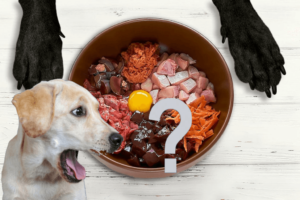
Raw meat may contain harmful bacteria including Salmonella, Campylobacter, Listeria and E. coli. Lightly steamed or lightly cooked products may also lack a full pathogen-killing step. Infection can follow direct handling or cross-contamination of hands, utensils, surfaces, human food and the household environment.
A UK Food Standards Agency survey of 380 retail raw dog and cat food products, sampled from March 2023 to February 2024, found a high prevalence of relevant pathogens. The FSA’s risk assessment concluded that poor handling and hygiene are likely to increase cross-contamination and possible human infection. These findings support careful handling; they do not mean every pack is contaminated or that hygiene makes raw feeding risk-free.
Raw dog food safety checklist
Buying and transporting
- Choose intact, leak-proof packaging from a responsible supplier.
- Follow the product’s frozen or chilled storage instructions and use-by date.
- Keep raw pet food separate from ready-to-eat human food during transport.
- Wash hands after touching packaging if it is wet, damaged or contaminated.
Storing
- Keep frozen raw food frozen until required.
- Use a dedicated, covered container.
- Store it away from human food in the refrigerator or freezer, ideally where leaks cannot drip onto other items.
- Follow the manufacturer’s instructions after opening.
Defrosting
- Defrost raw pet food away from human food, preparation surfaces and equipment.
- Use a dedicated covered container that can be cleaned thoroughly.
- Do not assume freezing, freeze-drying or dehydration kills every bacterium; WSAVA notes that these processes do not remove all microbial risk.
- Follow the pack’s time and temperature directions rather than improvising.
Preparing and feeding
- Wash hands with soap and hot water immediately after preparation and handling.
- Use dedicated utensils where practical.
- Avoid touching taps, cupboard handles, phones or human food with contaminated hands.
- Keep children away while raw food is prepared.
- Throw away uneaten raw food as soon as reasonably practical, following the product instructions.
Cleaning afterwards
- Clean and disinfect worktops, storage containers, utensils, bowls and any appliance surface the raw food touched.
- Wash reusable cloths or replace disposable cleaning materials.
- Wash hands again after cleaning and after handling the dog’s faeces.
Who is at greater risk?
Young children, pregnant people, older people and anyone who is immunocompromised can face greater consequences from foodborne infection. The FSA also identifies puppies, kittens and pets with pre-existing disease as potentially vulnerable. Risk can arise even when a vulnerable person does not prepare the food, because contamination may spread through surfaces, bowls, the animal or faeces.
If someone in the household is vulnerable, discuss feeding choices with the relevant healthcare professional and your veterinarian rather than relying on a checklist alone.
Safety is not the same as nutritional completeness
Good hygiene addresses microbial exposure; it does not prove that a diet is nutritionally complete. Commercial raw products should be checked for “complete” or “complementary” status and the intended life stage. Home-prepared raw diets can contain nutrient deficiencies or excesses, and the risk is especially important during growth. Do not assume a supplement can correct an unbalanced recipe.
When to seek help
Contact a veterinarian if your dog becomes unwell, particularly with persistent vomiting, diarrhoea, lethargy, pain or other concerning signs. People with symptoms should contact an appropriate healthcare professional. Tell them about raw pet food exposure where relevant.