Super Dog Diets — evidence-led guidance. Last reviewed: 1 October 2026.
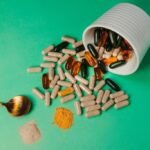
Walk down the supplements aisle of any UK pet shop and you'll find tubs promising joint support, shinier coats, calmer behaviour and happier tummies. For an owner who just wants the best for their dog, the pull is obvious. But "supplement" is a surprisingly loose word, and a few important questions are worth answering before anything goes in the bowl: is this product regulated the way a medicine is? Does the evidence actually support what it's used for? And could it do harm alongside a diet that's already nutritionally complete?
This guide doesn't recommend or rank any specific product. It's here to help you reason through the decision yourself — starting with the law.
A supplement is not a medicine, legally
In the UK, a product that treats or prevents disease is a veterinary medicine, and it's regulated by the Veterinary Medicines Directorate (VMD). The VMD's own guidance on advertising non-medicinal veterinary products sets out two ways a product can be classed as medicinal: "medicinal by presentation" (it's marketed as improving or curing a health problem) and "medicinal by function" (it contains a substance the VMD recognises as having a proven medicinal effect for treating or preventing disease). Anything that crosses either line needs a veterinary medicine authorisation — the same rigour as a prescription drug.
A joint supplement, probiotic sachet or fish oil capsule, by contrast, is legally a complementary feed — regulated as food, not medicine, and overseen by trading standards and the Food Standards Agency rather than the VMD. That's a meaningful gap: a feed supplement does not have to prove it works to a regulator before it reaches the shelf. The VMD's guidance is explicit about what a non-medicinal product can and cannot say about itself. It may claim things like supporting "health maintenance" in a healthy animal or "normal physiological function" — but it must not claim to treat, cure or prevent disease, "boost the immune system", act as a "diarrhoea remedy" or "reduce pain". If a label or an advert crosses into that territory without a medicine authorisation behind it, it's not following the rules, however persuasive it sounds.
This distinction matters because it puts the responsibility for judging evidence back on the owner — and, ideally, their vet — rather than on a regulator who has already vetted the claim.
The common categories, described neutrally
A handful of categories make up most of what's sold as a dog supplement. None of them should be read as a recommendation.
Joint supplements (often containing glucosamine, chondroitin, green-lipped mussel or omega-3) are commonly given to dogs with arthritis or those thought to be at higher risk of it. PDSA's own guidance on joint supplements for dogs is a fair summary of where the evidence sits: they're described as working through "natural anti-inflammatory action", keeping "joint fluid healthy" and feeding "cartilage" — but PDSA is careful to add that they "help some dogs, but not all." On safety, PDSA states there are "no major side effects associated with joint supplements" and that they are generally safe to use alongside most other medications, while still recommending owners "contact your vet surgery for advice" on whether a dog might benefit and which type suits them.
Omega-3/fish oil products are widely used for skin, coat and joint-related inflammation. The evidence here is genuinely mixed rather than settled. A 2023 peer-reviewed study in Frontiers in Veterinary Science comparing flaxseed, camelina and canola oil supplementation in healthy adult dogs found improvements in coat softness and shine across all three oils, but no measurable difference in inflammatory markers between them — and the authors note that healthy dogs already have low baseline inflammation, so a supplement has little room to show a detectable effect in the first place. That's a useful caution against assuming a product "works" just because a coat looks glossier.
Probiotics are marketed for digestive and gut health. A review from the University of Edinburgh on the use of pre-, pro- and postbiotics ("biotics") in managing gastrointestinal disorders in dogs and cats concludes that "emerging evidence tentatively supports" their therapeutic use, particularly for their potential to reduce antibiotic use — language that reflects a promising but still-developing evidence base, not a settled one.
The "more isn't better" risk
It's easy to assume that because a supplement isn't a medicine, it can't really do harm. That's not right, and it's the single most important safety point in this guide.
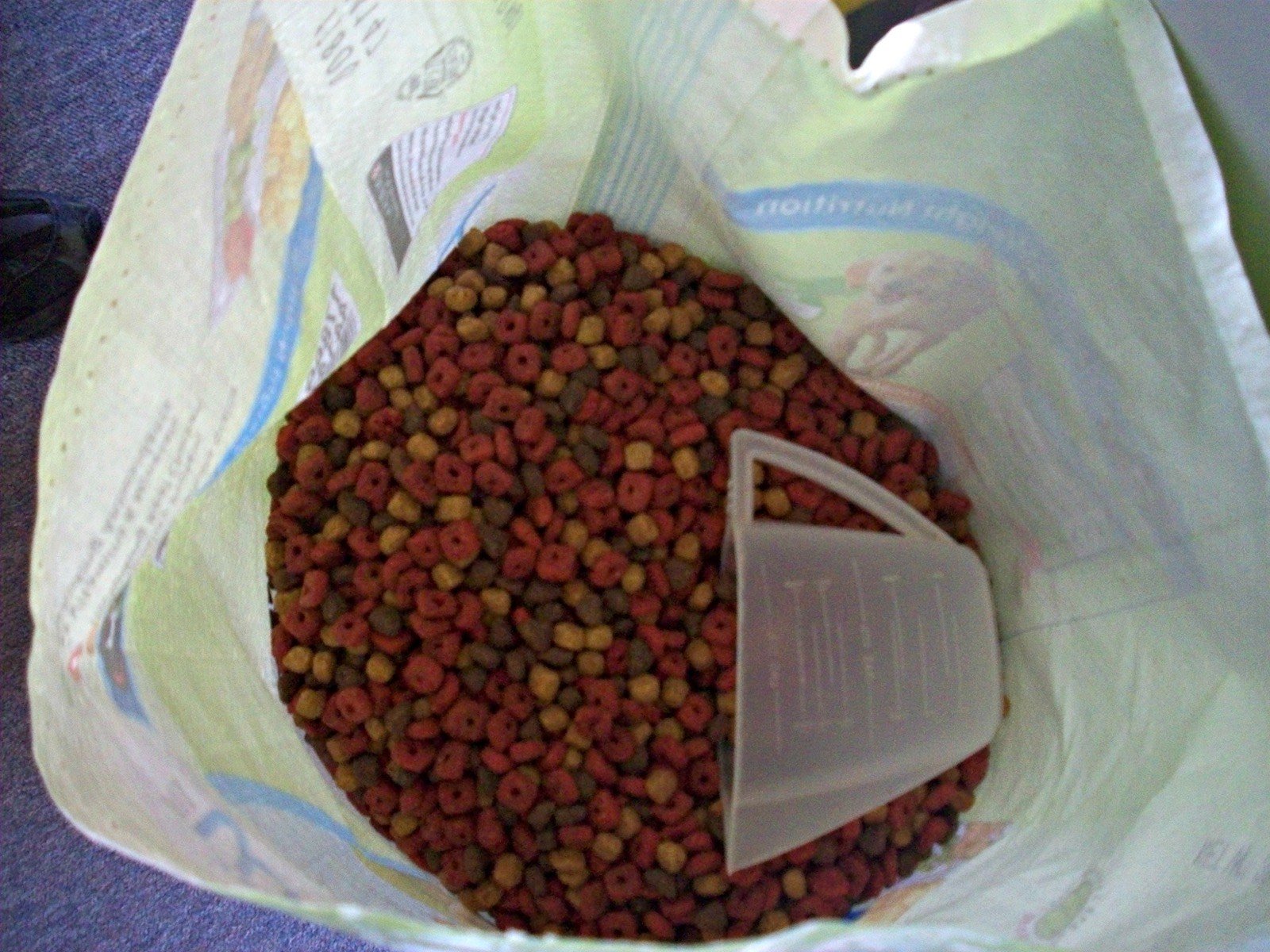
Most dogs in the UK are fed a commercial complete food. Under UK Pet Food's own factsheet on pet food labelling, "complete" is a legal definition: it means "the product contains all the nutrients a pet needs to support its daily life when fed as directed." In other words, a complete diet is already formulated and fortified to supply a dog's full nutritional needs — vitamins, minerals and all (see our dog nutrition basics guide for what that actually covers). Layering a supplement on top doesn't add to a blank slate; it adds to a diet that may already be at or near target levels for the nutrients in question.
That matters most for fat-soluble vitamins, which the body stores rather than excretes. Veterinary sources describe vitamin A poisoning in dogs as occurring "when pets are fed raw liver, cod liver oil, or other supplements rich in vitamin A over several weeks to months" — a slow accumulation rather than a single dramatic overdose, with signs including poor coat condition, dry skin, weight loss and painful joint movement developing gradually. The same logic applies more broadly: combining a fortified complete food with an additional vitamin, mineral or joint supplement can push total intake past what's needed, and in some cases past what's safe, without anything looking obviously wrong until symptoms build up.
Unregulated and mislabelled products are a real risk
Because feed supplements don't need pre-market proof of efficacy the way medicines do, the category has, at times, attracted products making claims the evidence didn't support. The VMD and Defra ran a public clampdown on exactly this issue, targeting what they called "neutraceuticals" claiming to treat disease without supporting evidence, alongside homeopathic and herbal products making similar claims. The VMD's then Director of Operations, John FitzGerald, put it plainly: "Some of these products are claiming to be effective and safe when no scientific evidence has been presented to us to show they are." The British Veterinary Association's president at the time, Harvey Locke, added a sharper warning: unauthorised products "may at the least be ineffective and at worst could cause harm because serious life-threatening diseases may go undiagnosed." That second point deserves attention — the danger isn't only the product itself, but the possibility that a real problem is masked or delayed by reliance on something unproven.
Practically, that means treating supplement marketing claims with the same scepticism you'd apply to any unregulated product: clear ingredient lists, a manufacturer you can actually contact, and a statement of whether the product is a complementary feed are reasonable minimums — but none of that is a substitute for asking whether there's genuine evidence behind what's being claimed.
When to ask a vet first — not after
Some situations call for a vet's input before a supplement is given at all, rather than after something goes wrong:
- Puppies, whose growth and skeletal development can be disrupted by excess or imbalanced vitamins and minerals, particularly calcium and vitamin A/D.
- Pregnant or nursing dogs, where nutrient needs shift and some commonly marketed supplements are not appropriate without veterinary guidance.
- Dogs on existing medication, where a supplement could interact with a prescribed drug or alter how it's absorbed or processed.
- Dogs with a diagnosed condition, where a supplement might be genuinely useful as an adjunct — but should be chosen and monitored by the vet managing that condition, not added independently.
In every one of these cases, the right first step is a conversation with your vet, not a purchase.
The bottom line
A supplement sitting outside veterinary medicine regulation doesn't mean it's been proven safe, and it doesn't mean it's been proven to work — it means neither question has been settled by a regulator on your behalf. For a dog already eating a complete, fortified diet, the realistic benefit of most supplements is modest at best, and the realistic risk of over-supplementing is not zero. The most reliable filter isn't a label claim or a glossy coat photo — it's asking your vet whether your individual dog, their diet and their health history actually make a particular supplement worthwhile.
Sources
- VMD guidance: Advertising non-medicinal veterinary products (gov.uk) — used for the legal distinction between "medicinal by presentation" and "medicinal by function", and the list of permitted vs prohibited claims for non-medicinal products such as supplements.
- Alternative pet remedies: government clampdown (gov.uk news/VMD and Defra) — used for the VMD and BVA quotes on unregulated "neutraceutical" and herbal products making unproven claims, and the risk of masking real disease.
- PDSA: Joint supplements for dogs — used for the neutral description of joint supplement ingredients and mechanism, PDSA's "help some dogs, but not all" framing, safety statement, and the recommendation to ask a vet first.
- UK Pet Food: Understanding Pet Food Labels factsheet — used for the legal definitions of "complete" and "complementary" pet food, underpinning the double-dosing/over-fortification risk.
- VCA Hospitals: Vitamin A Poisoning in Dogs — used for how fat-soluble vitamin A toxicity accumulates from supplements such as cod liver oil, and its clinical signs.
- University of Edinburgh: Evidence-based use of biotics in the management of gastrointestinal disorders in dogs and cats — used for the "emerging evidence tentatively supports" framing of probiotic/prebiotic evidence in dogs.
- Frontiers in Veterinary Science (2023): Effects of dietary camelina, flaxseed, and canola oil supplementation on inflammatory and oxidative markers, transepidermal water loss, and coat quality in healthy adult dogs — used for the mixed/limited evidence on omega-3 oil supplementation for coat and inflammation in healthy dogs.
All sources above were individually fetched and checked against the quotes and claims used in this article on 1 October 2026. One additional source (a PDSA/private-practice client survey on supplement usage rates found via search) was deliberately dropped from this draft because its original context could not be independently confirmed as an official PDSA publication in this session. Two further candidate sources on omega-3 fatty acids (a PMC article and a Frontiers EPUB file) could not be read in full — one was blocked by a bot-verification page and the other returned only binary file data — so no claims were drawn from either, and the verified HTML version of the Frontiers study was used instead.