Super Dog Diets — evidence-led guidance. Last reviewed: 2 October 2026.
If your dog has already eaten something and is unwell, stop reading and call now
If your dog has eaten something you're worried about and is showing symptoms — vomiting, diarrhoea, lethargy, trembling, wobbliness, collapse, a swollen abdomen, pale gums, or difficulty breathing — contact your own vet or an emergency vet line immediately. Don't finish this article first, and don't wait to see if symptoms worsen. For grapes, xylitol and chocolate, symptoms can be delayed by hours or days, so "they seem fine right now" is not a reason to wait. Keep any packaging or a sample to show the vet.
If your dog ate something but shows no symptoms and you're just trying to work out whether to worry, read on — but when in real doubt, ring your vet rather than relying on a website.
Why "can dogs eat X" doesn't have one universal answer
Searching "can dogs eat [food]" usually turns up a flat yes or no, but the honest answer is almost always "it depends" — and understanding why makes every future food question easier to answer for yourself.
Dose matters. A food that's dangerous in a large quantity might do nothing in a tiny one, and vice versa. For grapes and raisins, vets cannot reliably say what dose is safe for an individual dog, because the toxic mechanism isn't fully understood and reactions vary enormously between dogs — which is why the advice is "any amount, contact your vet" rather than a quantity.
Dog size matters. The same quantity of a toxin is a bigger dose, relative to bodyweight, for a small terrier than a large retriever. Chocolate that gives a large dog mild stomach upset could be a genuine emergency for a small one.
Some toxicity is immediate, some is cumulative. Chocolate and xylitol tend to cause one acute reaction from a single large exposure. Alliums work differently — they damage red blood cells progressively, so repeated small exposures (gravy with onion in it, every few days) can build to a problem even if no single meal looked dangerous at the time.
"My dog ate it once and was fine" is not evidence of safety. This is the most common reasoning mistake owners make. A dog that ate a grape last month with no apparent ill effect hasn't proven grapes are safe for that dog — the most serious reactions can be dose-dependent, delayed, or simply inconsistent between individual dogs and even between separate incidents in the same dog. Treat every exposure to an unsafe food as worth taking seriously, rather than calibrating your worry by what happened last time.
The safety index
This table covers foods UK owners most commonly ask about. Verdicts use three categories: Unsafe — avoid entirely (don't feed deliberately, and treat accidental ingestion seriously), Depends on preparation (safe in one form, risky in another), and Safe in small amounts (fine as an occasional extra for most healthy adult dogs, not a reason to abandon a complete diet).
| Food | Verdict | Why |
|---|---|---|
| Chocolate | Unsafe — avoid entirely | Contains theobromine, which dogs can't metabolise well; darker chocolate is higher risk. Covered in depth in our dedicated chocolate article. |
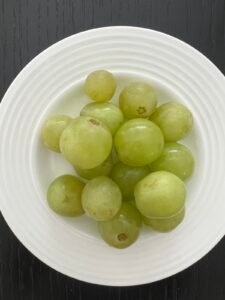
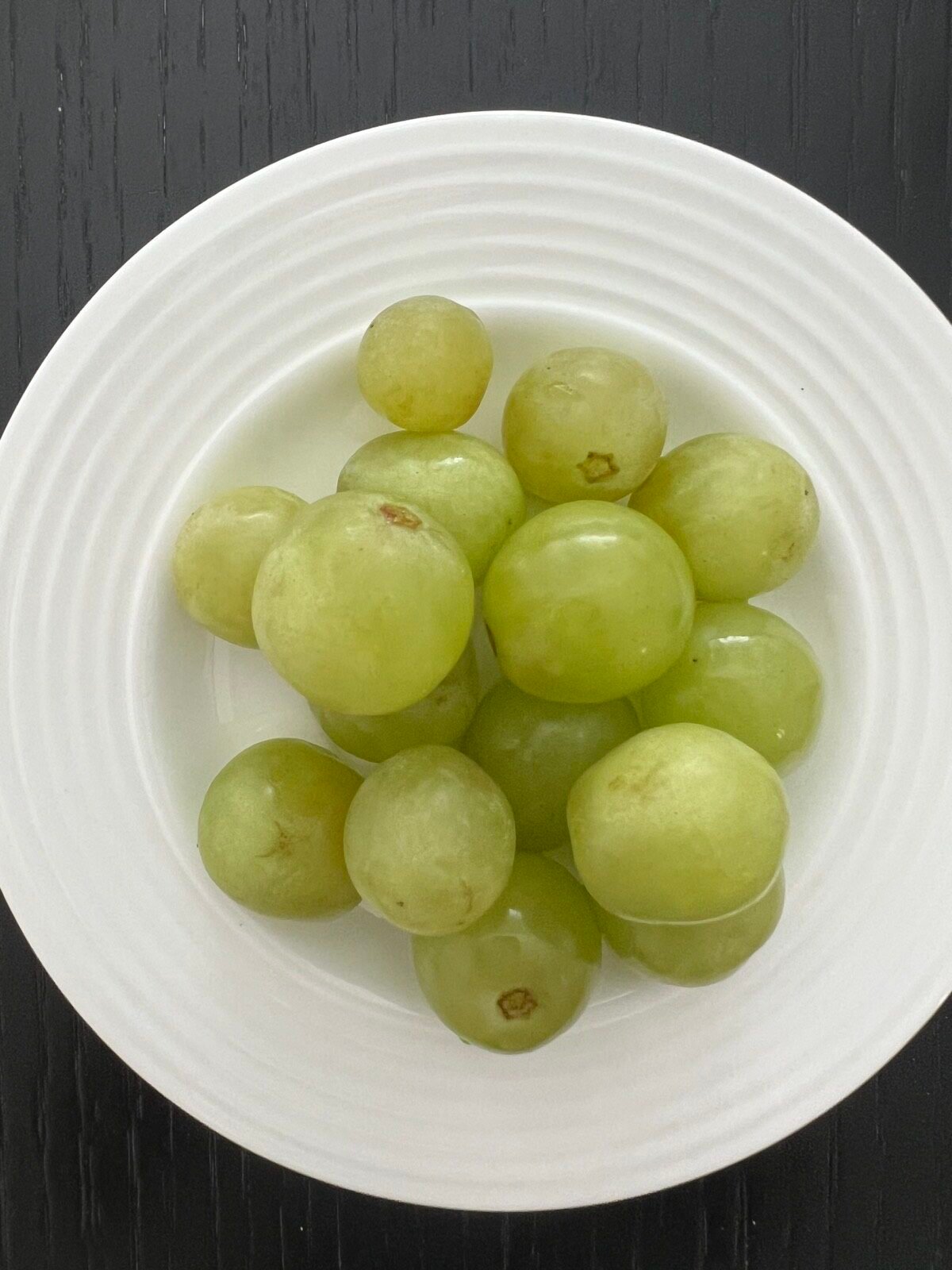
| Grapes, raisins, sultanas, currants | Unsafe — avoid entirely | Linked to kidney failure; no known safe amount for an individual dog, so any amount warrants a vet call. Covered in depth in our dedicated grapes/raisins article. |
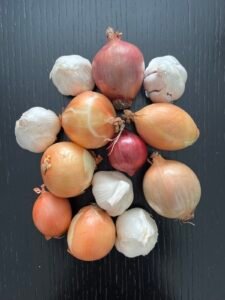
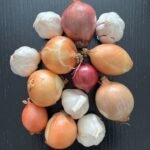
| Onions, garlic, leeks, chives (alliums) | Unsafe — avoid entirely | Damage red blood cells and can cause anaemia; persists even when cooked or powdered. Garlic covered in depth in our dedicated garlic article; see the alliums section below. |
| Xylitol (sweetener) | Unsafe — avoid entirely | Triggers a dangerous insulin surge and blood sugar crash, and can cause liver failure; see the dedicated section below. |
| Macadamia nuts | Unsafe — avoid entirely | Even a small amount can cause weakness, tremors and difficulty walking; the mechanism isn't fully understood. |
| Alcohol | Unsafe — avoid entirely | Dogs are far more sensitive to ethanol than humans; effects range from poor coordination to tremors and death. |
| Caffeine (tea, coffee, energy drinks) | Unsafe — avoid entirely | Affects the heart and nervous system much like theobromine does. |
| Raw bread/pizza dough | Unsafe — avoid entirely | Rises and ferments in a warm stomach, producing ethanol and gas — both alcohol toxicity and dangerous bloating. |
| Avocado | Unsafe — avoid entirely | Contains persin, concentrated in skin, stone and leaves but also present in the flesh; unripe fruit is a particular risk. |
| Cooked bones | Unsafe — avoid entirely | Can splinter and cause choking, gut blockage or internal injury — a physical hazard, not a toxin. |
| Corn on the cob | Unsafe (the cob, not the corn) | The cob isn't digestible and commonly causes life-threatening gut blockages; kernels off the cob are a different matter. |
| Plain cooked chicken | Safe in small amounts | A lean, easily digested protein; the risks are seasoning, cooked bones, or skin left on. |
| Plain cooked rice | Safe in small amounts | Bland and easy to digest, which is why it's a short-term bland-diet staple — not a reason to feed it daily. |
| Carrots | Safe in small amounts | Low-calorie and generally well tolerated raw or cooked; introduce gradually. |
| Blueberries | Safe in small amounts | Among the fruits dogs commonly tolerate well; moderation avoids stomach upset. Covered in depth in our dedicated blueberries article. |
| Peanut butter (no xylitol) | Depends on preparation | Peanuts are generally fine, but many peanut butters now contain xylitol — check the label every time, even on a brand you've used before. |
Xylitol: the hidden danger in your kitchen cupboard
Xylitol deserves its own section because it's one of the most dangerous, least-recognised risks for UK dog owners — it doesn't look like a "dog hazard" on the label. It's an artificial sweetener found in sugar-free gum, some sugar-free mints and sweets, baked goods, peanut and nut butters, and dental products.
In dogs, xylitol makes the pancreas release a surge of insulin as if real sugar had been eaten. With no actual sugar for that insulin to act on, blood sugar crashes — hypoglycaemia — bringing on weakness, wobbliness, collapse and seizures. Xylitol can also cause liver failure, sometimes appearing a day or more after ingestion.
What makes this easy to miss is how ordinary the products are: a stick of gum in a handbag, a jar of "healthy" peanut butter bought because it has less sugar, home-baked low-sugar flapjacks. None of these look like poison. The only real protection is to check the ingredients list every time, including for products you've bought before, since manufacturers do reformulate. If a dog has eaten anything containing xylitol, treat it as an emergency and call your vet immediately, even before symptoms appear.
Onions, garlic and the allium family: a different kind of danger
Onions, garlic, leeks, shallots and chives all belong to the allium family, and they work differently from most of the acute toxins on this page. For a full deep-dive on onion, garlic and leek poisoning specifically, see our dedicated guide. Rather than one dramatic reaction from a single exposure, alliums damage red blood cells in a way that can build up over repeated small exposures — a spoonful of gravy, a bit of takeaway, table scraps with onion or garlic in them, none of which cause an obvious problem on any single occasion, but which can gradually cause anaemia.
It's tempting to judge a food by whether anything bad happened "that time," but allium toxicity is cumulative, so an uneventful history doesn't mean the food is safe. Toxicity also persists through cooking, powdering or dehydrating — cooked onion in a sauce, onion powder in a seasoning mix, and raw onion are all still a risk. Keep all alliums, in any form, out of a dog's diet entirely, and check ingredient lists on gravies, stocks and ready meals before sharing any with a dog.
Genuine emergency, or just keep an eye on them?
Not every food mishap needs a 2am dash to an emergency vet, but it's important not to guess wrong.
Treat it as an emergency and call immediately if: your dog has eaten anything from the "unsafe — avoid entirely" list above, regardless of symptoms; your dog is showing any symptom listed at the top of this article; or you aren't sure what they ate but they seem unwell.
It may be reasonable to monitor at home, while staying alert, if: your dog has eaten a small amount of a "safe in small amounts" food, shows no symptoms, and is otherwise behaving completely normally. Even then, watch them for the next 24 hours and don't hesitate to call if anything changes.
When in doubt, call — a phone call costs a few minutes; waiting to "see how they get on" costs the hours in which some of these toxins do the most damage.
Who to call in the UK: start with your own vet practice. Nearly all UK practices either run their own out-of-hours emergency service or are contracted to one, and their daytime phone line will typically divert automatically, or give you a number, once the practice is closed. Save that number now, before you need it. If you can't reach your own practice, search for your nearest emergency vet clinic. Keep any packaging or a sample of what your dog ate to show the vet — it speeds up treatment.
Sources
- Dogs Trust — What foods are toxic to dogs and the human foods you can feed them — used for the toxic-foods list and mechanisms (chocolate, onions/garlic/leeks/chives, ethanol/alcohol and raw dough, grapes/raisins/sultanas/currants, xylitol, avocado/persin, caffeine, macadamia nuts, corn on the cob, cooked bones) and for the safe/moderation foods list (including plain cooked chicken, carrots, blueberries, and the specific caveat that peanut butter must be "xylitol & additive free").
- PDSA — Chocolate poisoning in dogs — used to corroborate the theobromine mechanism, risk gradient by chocolate type, symptom timing (2–4 hours, up to 12 hours), and the "call your vet immediately, don't wait for symptoms" guidance reflected in this article's opening section.
Every source listed above was individually fetched in this session and its content checked against the specific claims used in this article on 2 October 2026. Statistics on xylitol poisoning case numbers from the Veterinary Poisons Information Service (VPIS) were found only via secondary news-site summaries during research, not by directly fetching a live VPIS page (the VPIS pages attempted returned 404), so no specific VPIS figure is quoted or cited here — the xylitol mechanism and risk described instead rely on the two sources listed above. A PDSA PDF factsheet on grape/raisin/sultana poisoning was also fetched but returned as unreadable binary/image data, so no claim in this article relies on it; the grapes/raisins/sultanas/currants entry instead relies on the Dogs Trust page. No bluecross.org.uk or rspca.org.uk page with directly fetchable, on-topic content was located during this research session (attempted URLs returned 403/404 or were not indexed), so neither is cited here, consistent with this site's standard of not citing anything that wasn't verified by direct fetch. Specific numeric "safe dose" claims (e.g. grams of xylitol, pieces of gum, number of grapes) were deliberately omitted throughout rather than sourced from unverified secondary summaries; the article says "avoid" or "small amount" instead.