Super Dog Diets — evidence-led guidance. Last reviewed: 2 October 2026.
If your dog has eaten onion, garlic, leek or chive, act now
If your dog has eaten a meaningful amount of onion, garlic, leek, chive or shallot — or is showing any of the following signs — contact your vet or an emergency vet immediately. Don't wait to see if things settle down.
- Vomiting or diarrhoea
- Lethargy or unusual weakness
- Pale, white or yellowish gums
- Red, orange or dark brown-tinged urine
- Rapid or laboured breathing
- Collapse
Call ahead so the practice can prepare, and if it's out of hours, go straight to an emergency vet rather than waiting for your usual surgery to open. Poisoning from this plant family can look mild at first and still become serious over the following days, so "wait and see" is not a safe approach.
Why alliums are dangerous to dogs
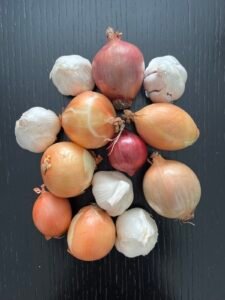
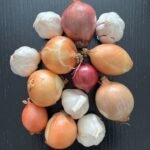
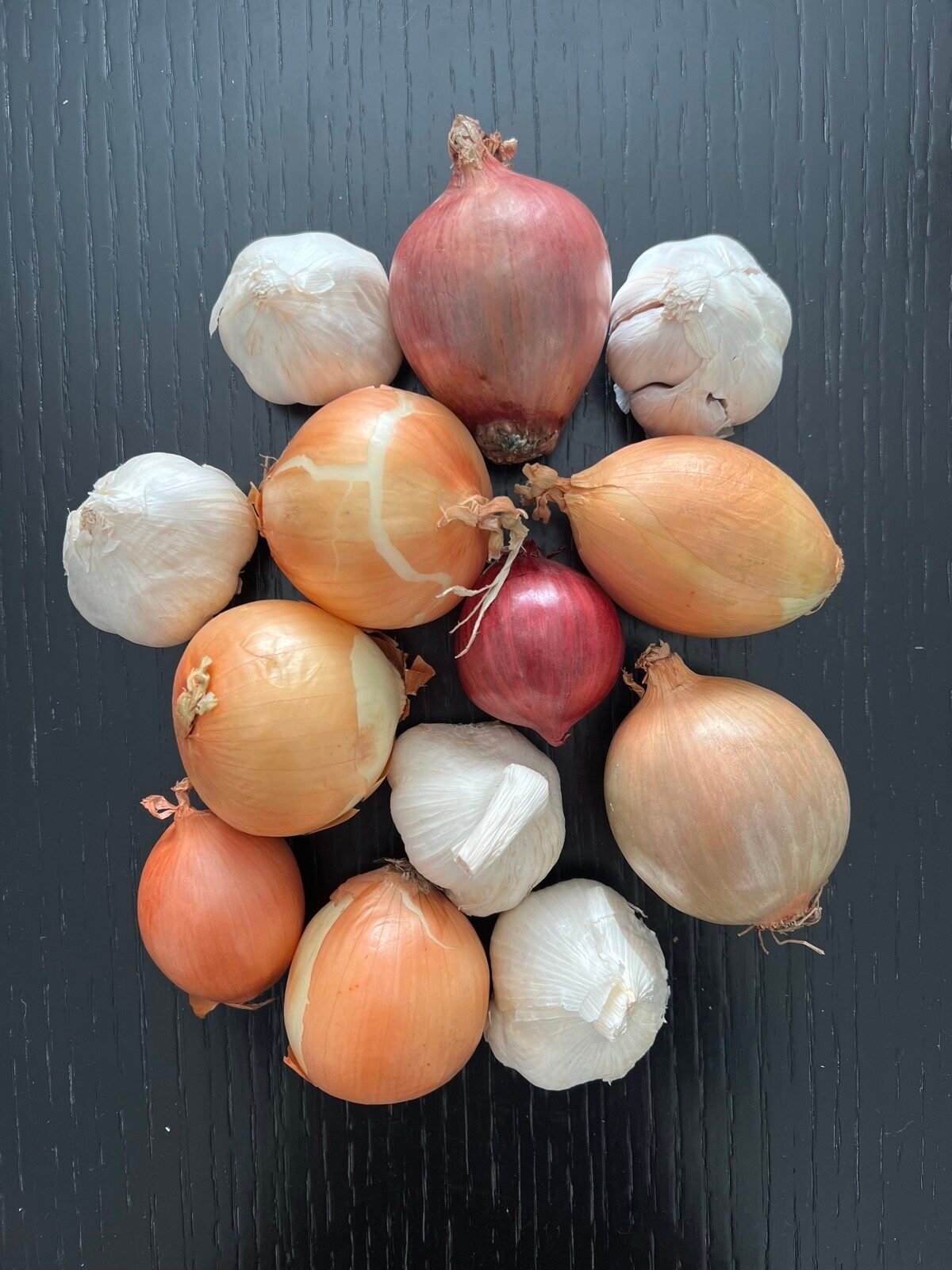
Onions, garlic, leeks, chives and shallots all belong to the Allium genus, and all of them are toxic to dogs. The damage comes from a group of organosulfur compounds — described in veterinary sources as thiosulphates, thiosulfinates, disulphides or organosulfoxides, depending on the exact plant and preparation — that are released when the plant is chewed, chopped or cooked.
These compounds cause oxidative damage to a dog's red blood cells. The cells become less able to carry oxygen and are increasingly likely to rupture, a process that can lead to haemolytic anaemia. Dogs lack the enzymes needed to safely break these compounds down, which is part of why they're more vulnerable than people are. This oxidative injury — including changes such as Heinz body formation — is well documented in veterinary toxicology literature and is consistent across onion, garlic, leek and chive exposures.
It isn't only about one big dose
It's tempting to think of this as a threshold problem — fine below a certain amount, dangerous above it. That's not a safe way to think about alliums. Because the toxic compounds damage red blood cells that the body can only replace, not repair, harm from smaller, repeated exposures can build up over time much as a single larger dose can. A dog who regularly gets a spoonful of gravy, a few crisps, or scraps of a takeaway containing onion or garlic is being exposed again and again — a pattern that carries real risk, even if no single incident looks dramatic. For this reason, avoid alliums altogether rather than treating the odd small taste as a safe habit.
Garlic is also significantly more concentrated than onion — veterinary references describe it as roughly three to five times more toxic, weight for weight — so "just a little garlic" is not reassuring.
Raw, cooked or powdered — every form carries the risk
Cooking does not reliably destroy the toxic compounds in alliums. Raw, cooked, dehydrated and powdered onion or garlic are all capable of causing poisoning. In fact, concentrated and dried forms — onion powder, garlic powder, dehydrated onion flakes, and dry soup or stock mixes — are often more potent gram for gram than the fresh vegetable, because the toxic compounds are more concentrated once the water content has been removed. This matters because these concentrated forms are exactly what turns up hidden in gravy, stock cubes, seasoning blends and processed leftovers.
Symptoms of allium poisoning — and when they appear
Early signs are often gastrointestinal: vomiting, diarrhoea, abdominal discomfort and a reduced appetite, which can appear within a few hours of eating. The more serious signs relating to red blood cell damage and anaemia — pale or yellowish gums, lethargy, weakness, rapid breathing, a fast heart rate, and dark or reddish urine — frequently don't appear straight away. They commonly develop one to five days after ingestion, as damaged red blood cells break down. This delay is one of the most important things to understand: a dog who seems fine on the day they ate the onion or garlic is not necessarily in the clear.
What to do if your dog eats onion, garlic or leek
- Contact a vet promptly, even if your dog seems completely normal. Don't wait for symptoms to appear before calling.
- Don't try to make your dog vomit yourself. Inducing vomiting at home — including with salt water — can cause further harm and should only be done under veterinary guidance.
- Bring information with you. If you can safely do so, take any packaging, or details of what was eaten and roughly how much, to help the vet assess the risk and decide on treatment.
- Follow your vet's advice on monitoring. Because anaemia can take days to develop, your vet may want to recheck your dog or run blood tests even after an initial assessment looks reassuring.
Hidden sources of allium in a UK kitchen
Alliums turn up in far more places than the vegetable rack. Common culprits in UK households include:
- Gravy granules and gravy made from scratch with onion
- Stock cubes and stock pots
- Some flavoured crisps and savoury snacks
- Pizza, curries, and most takeaway dishes
- Baby food — sometimes given to dogs as a treat or to hide medication, but many varieties contain onion or garlic powder
- Pet treats that shouldn't contain allium ingredients but are occasionally mislabelled — check ingredient lists rather than assuming
The bottom line
Onions, garlic, leeks, chives and shallots are genuinely dangerous to dogs in any form, and the risk isn't limited to eating a large amount in one go — small, repeated exposures matter too. There's no verified "safe" amount worth relying on, so the safest approach is to keep all alliums, and anything made with them, away from your dog entirely. If you're ever unsure whether your dog has eaten something containing onion or garlic, treat it as a reason to call your vet rather than a reason to wait. For a wider look at which other everyday human foods are safe or risky for dogs, see our UK safety index.
Sources
- PDSA — "Onion and garlic poisoning in dogs". Fetched and verified directly. Used for: definition of alliums, toxic compounds ("disulphides and thiosulfinates"), mechanism (red blood cell damage/anaemia), symptom list, onset timing (within 24 hours, more commonly a few days; anaemia signs 1–5 days), and first-aid framing (contact vet; vet may induce vomiting within ~4 hours under veterinary care only).
- Royal Kennel Club (formerly The Kennel Club; thekennelclub.org.uk now redirects to royalkennelclub.com) — "Why is onion bad for dogs?". Fetched and verified directly. Used for: "thiosulphate compounds," haemolytic anaemia, dogs lacking the enzymes to break the compounds down, and confirmation that cooked/processed forms remain dangerous.
- RSPCA — "Dog poisoning". Fetched and verified directly. This page does not mention alliums specifically; used only for general poisoning first-aid advice (contact a vet immediately, do not induce vomiting yourself, bring packaging/information if safe to do so).
- Frontiers in Veterinary Science — "Allium Species Poisoning in Dogs and Cats" (peer-reviewed review). Fetched and verified directly, including a follow-up fetch confirming the VPIS case data. Used for: mechanism terminology (organosulfoxides; oxidative hemolysis with methemoglobinemia and Heinz body formation), dose data (15–30 g/kg raw onion in dogs), confirmation that cooking/drying/processing does not eliminate toxicity, onset timing, and UK case data recorded by the Veterinary Poisons Information Service (69 canine cases and 4 feline cases, 1994–2008, including two canine deaths and two euthanised).
- MSD Veterinary Manual (professional reference, formerly Merck Veterinary Manual) — "Allium spp Toxicosis in Animals". Fetched and verified directly across three separate queries. Used for: mechanism detail (oxidative damage, Heinz bodies, methemoglobinemia beginning within 24 hours and peaking around 72 hours), confirmation that toxic compounds are released by chopping, cooking or chewing, the 15–30 g/kg raw onion dose figure, clinical sign list and 3–5 day hemolysis timing, the garlic-vs-onion potency comparison ("garlic is 3–5 times more toxic than onion"), and confirmation that poisoning is most commonly linked to concentrated forms (dehydrated flakes, powders, dry soup mixes).
Note: pfma.org.uk is defunct and was not used or cited; UK Pet Food (ukpetfood.org) was considered but had no directly relevant allium-specific guidance to add beyond the sources above.
Verification note: all clinical, mechanistic and dose claims above were checked against the live text of the cited page via direct fetch, not inferred from search-result snippets. Two claims were deliberately softened rather than asserted as directly sourced facts: (1) the "small repeated exposures add up" framing is presented as a reasoned explanation following from the verified oxidative-damage mechanism (red blood cells can't repair this damage, only be replaced), rather than as a verbatim claim from a specific source, because no directly-fetched veterinary source explicitly used the words "cumulative" or "repeated exposure" in this context — search snippets made this claim but could not be verified by direct fetch, so they were not relied upon; (2) no specific "safe" gram threshold is given anywhere in the article, deliberately, even though a documented toxic-dose figure (15–30 g/kg raw onion) was verified and is cited for context only, not as a safety line. I was unable to directly verify a citable public-facing page from Blue Cross, Dogs Trust or the Veterinary Poisons Information Service's own site (vpisglobal.com) on this specific topic — searches for these returned only aggregator/SEO content or unrelated pages, so they were not cited; the VPIS case data used here comes via the peer-reviewed Frontiers review, which cites VPIS as its source.